
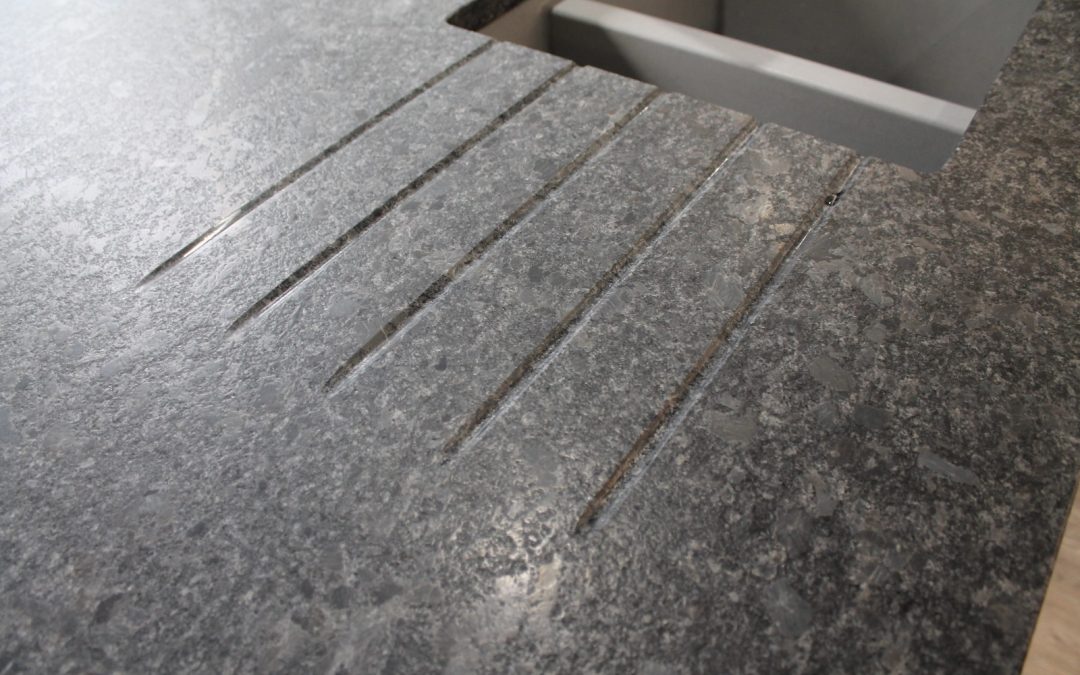
The worktop is usually the first significant material decision in a bespoke kitchen, and most clients arrive at it with the same question: granite or quartz? Both deliver a sense of luxury, both perform well, and both can carry a kitchen for decades. The honest answer is that the choice depends on lifestyle, not on which stone is objectively “better.”
Granite is natural stone with unique veining and high heat resistance, suited to keen cooks who want character in their kitchen. Quartz is engineered stone with consistent colour, a non-porous surface and minimal maintenance, suited to households who want a hard-wearing finish that stays predictable. Both belong in a bespoke kitchen. The right one is the one that matches how you actually live.
How granite and quartz differ as kitchen worktops
Granite is quarried natural stone. Each slab is cut from the earth, polished, and finished to reveal its own veining and colour mix. No two pieces are ever the same.
Quartz is engineered. Natural quartz crystals are combined with resin and pigments to produce a controlled, consistent surface available in finishes that range from crisp whites to bold tones. The pattern you see in the sample is the pattern you receive.
The practical difference shows up in everyday use. Granite needs occasional resealing to protect against stains, and asks for reinforced cabinetry because it’s heavier than most alternatives. Quartz is non-porous, scratch-resistant and needs almost no upkeep, but it can’t take direct heat the way granite can.
What granite worktops bring to a bespoke kitchen
Granite appeals to clients who want character and uniqueness in their kitchen. It tends to suit people drawn to materials with their own story, something timeless and naturally formed.
Where granite earns its place
- Natural beauty and individuality in every slab
- High heat resistance, useful for keen cooks
- Strength and durability when sealed correctly
- Range of finishes, including polished, leathered and caressed textures
Where granite asks more of you
- Needs resealing periodically to protect against stains
- Heavier than most alternatives, requiring reinforced cabinetry
- Variation between slabs means careful selection in person is essential
Where quartz worktops fit best
Quartz suits busy family homes. The non-porous surface resists stains, bacteria and moisture, which matters when the kitchen is in constant use. Its consistency also makes design planning easier because the slab you specify is the slab you receive.
Where quartz earns its place
- Non-porous and resistant to stains, bacteria and moisture
- Scratch-resistant and extremely durable
- Available in a wide colour range, from crisp whites to bold tones
- Minimal maintenance once installed
Where quartz asks more of you
- Less heat resistant than granite, so trivets are always recommended
- Uniform pattern lacks the natural drama of granite
- Cost varies depending on brand, colour and thickness
How to choose between granite and quartz
When we help clients work through this choice, we always start with lifestyle, not material.
If you love hosting and want a worktop that draws attention, granite delivers that. Bold veining and one-of-a-kind patterning make granite a feature surface in the room.
If you need something that stays looking pristine through daily spills, school runs and family cooking, quartz tends to make more sense. It performs under pressure and asks less of you in return.
Budget plays a role too. Both are premium materials, but granite slabs vary dramatically in rarity and cost. Quartz pricing is more consistent, though certain colours and finishes still sit at the top end. There’s more on the wider decision in our guide to choosing a luxury worktop for a kitchen renovation.
Practical design considerations beyond the material
Choosing between granite and quartz worktops is one decision. Three others shape the finished result just as much.
Lighting
Worktop samples should always be viewed in your own home under both natural and artificial light. What looks warm and soft in a showroom can look stark under LED downlights, particularly with grey-toned stone or cool quartz finishes.
Edge profiles
The edge detail transforms how a worktop reads. Bullnose, bevelled, ogee and waterfall profiles each give granite or quartz a different finish, and the right choice depends on the cabinetry style underneath.
Pairing with cabinetry
Bold granite often works well with understated cabinetry. Quartz can provide a calming backdrop for stronger cabinet colours and finishes. In a modern kitchen, both can carry the room, but each asks for different supporting decisions in the cabinets and handles. A true handleless kitchen, for example, reads very differently against natural granite than against engineered quartz.
Sustainability and longevity
Sustainability is worth weighing alongside the material choice. Granite is entirely natural and, if maintained, can last decades without losing its character. Quartz is engineered, but because it’s so durable and needs less ongoing maintenance, it reduces waste over time.
Both are long-term investments. Neither dates the way other surfaces do.
Common questions about granite vs quartz worktops
Is granite or quartz more durable?
Both are durable, but in different ways. Granite has higher heat resistance and lasts decades with periodic resealing. Quartz resists scratches, stains and bacteria better, but can be damaged by direct heat.
Does granite need to be sealed?
Yes. Granite is porous and needs resealing periodically to protect against stains. The exact schedule depends on the type of granite and how the kitchen is used.
Is quartz cheaper than granite?
Not always. Both are premium materials. Granite varies more dramatically in price depending on rarity, while quartz pricing is more consistent but rises with certain colours, brands and finishes.
Which is better for a family kitchen?
Quartz often makes more sense for busy family homes because it needs less maintenance and resists stains and bacteria. Granite still works, but it asks for more care.
Granite or quartz: the considered answer
The right worktop for your kitchen depends on how you live, not on which stone is universally “better.” Granite suits homes that want character and a surface with its own story, and rewards a keen cook with proper heat tolerance. Quartz suits homes that want consistency, minimal upkeep and a surface that takes daily use without showing it. A bespoke kitchen can carry either beautifully, provided the choice is made with the rest of the room in mind.
If you’d like to see granite and quartz samples under your own kitchen lighting, arrange a worktop consultation with Kevin Richardson Bespoke and we’ll bring slabs to your home, look at how each one sits with your cabinetry and lighting, and help you choose the surface that performs for the way you use the space. You can also explore our bespoke kitchens service to see how we design and fit kitchens across Newcastle and the North East.