
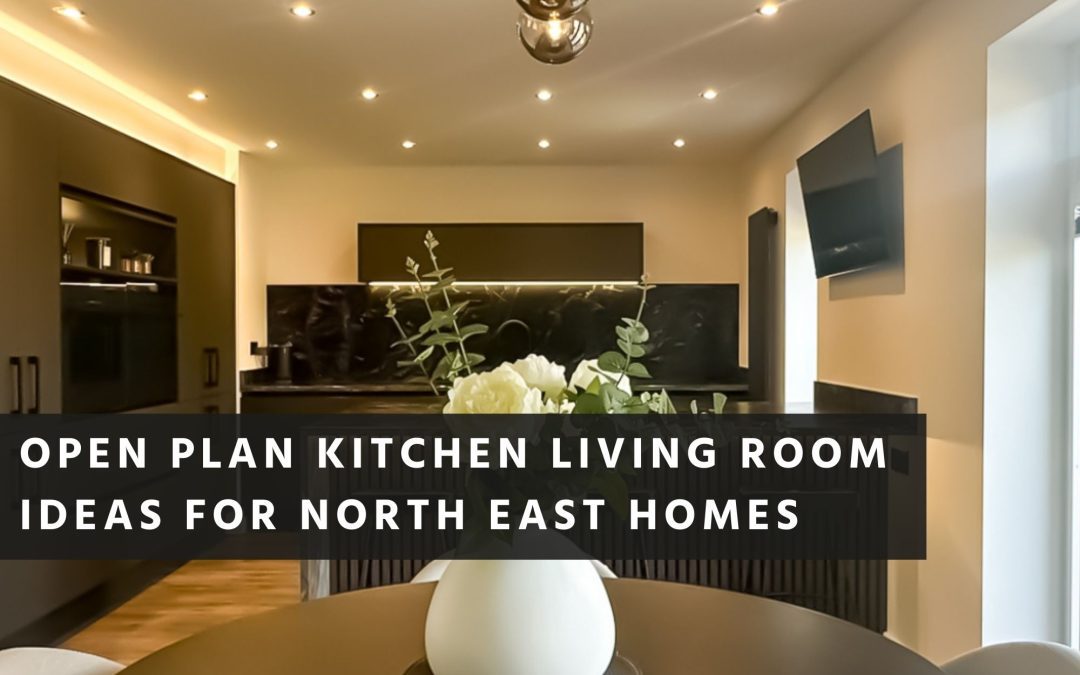
Open-plan kitchen living rooms change how a home works. Instead of cooking in a separate room while the family gathers elsewhere, everything happens in one space. Meals, homework, conversation, entertaining. The kitchen becomes the centre of the house rather than a room you disappear into. The difference between an open-plan space that works and one that doesn’t comes down to how it’s planned.
When the kitchen becomes part of the main living area, everything is on show. Cooking noise, smells, lighting levels and storage all affect how the room feels day to day. Get those decisions right early and the space becomes the natural centre of the house. Get them wrong and it never quite settles.
Will Open-Plan Work for Your Household?
Open plan living suits households where the kitchen is already the gathering point. If meals, conversation and daily routines revolve around the kitchen, removing separation can make the space feel more connected and sociable.
It is less successful in homes where schedules clash. A dishwasher running while someone is watching television a few metres away. Early morning cooking when someone else needs quiet. These issues are manageable, but only if they are considered before any building work begins.
An honest conversation about how the room will actually be used is more important than any layout sketch.
Knocking Through, Extending, or Both
There are usually two routes to creating an open plan kitchen living room.
Knocking through removes the wall between the existing kitchen and the adjoining room. In most North East properties that wall is load-bearing, which means a structural beam and building control approval. The overall footprint stays the same, but the space feels significantly larger.
Extending at the rear adds square metreage and flexibility. Many single-storey extensions fall under permitted development, though this depends on the property and location. An extension allows for larger islands, better circulation and clearer zoning between kitchen and living areas.
Some projects combine both approaches. Removing the internal wall and extending at the rear produces the most dramatic transformation, but it also requires careful coordination of structural work, electrics and installation sequencing.
Open Plan Kitchen Living Room Layout Ideas
Certain layouts work consistently in the room sizes most homeowners are dealing with.
An island layout places kitchen units along one wall with an island projecting into the room. The island becomes a natural divider between kitchen and living areas. If the hob is positioned on the island, you face into the room while cooking, which makes the space feel more social.
An L-shaped layout works well in squarer rooms. Units run along two adjacent walls, leaving space for a dining table and a defined seating area. This approach prevents the kitchen from dominating the entire room.
A peninsula suits narrower spaces. Attached to one wall, it creates division without restricting circulation. It offers seating and preparation space while keeping the layout efficient.
In homes with a chimney breast, the breast can anchor the kitchen area. A cooker positioned within the recess feels natural, and the structure itself provides subtle zoning between cooking and living areas.
Why Extraction Is the Most Important Decision in Open Plan
Extraction is the most important technical decision in an open plan kitchen.
Traditionally, extraction was calculated by working out the cubic metreage of the room and specifying a canopy hood powerful enough to clear that volume of air. In large open plan spaces, that approach becomes unrealistic unless you install a very large and visually dominant extractor.
We prefer downdraft hobs from manufacturers such as AEG and Bora. These systems draw steam and cooking smells downwards at source rather than relying on overhead capture. Because extraction happens immediately at hob level, smells are contained more effectively.
Downdraft systems also sit below ear level within the base cabinetry, which makes them noticeably quieter. They allow you to face into the room while cooking, and they avoid breaking sightlines with a large canopy hood.
Many models can recirculate filtered air back into the room, which means the heat you have paid for is not constantly vented outside. In a large open plan space, that makes a practical difference.
With the correct system specified, there should be no need to open windows to clear everyday cooking smells.
Managing Noise in an Open Plan Kitchen Living Room
In an open plan space, appliance noise carries further.
Dishwashers, washing machines and even boiling kettles become part of the living area environment. Checking decibel ratings when selecting appliances is important. Small differences on paper are noticeable in daily use.
Soft furnishings also play a role. Rugs, upholstered seating and curtains reduce echo and absorb sound, preventing the room from feeling hard and overly reflective.
Good design is not just about how the space looks, but how it sounds when people are using it.
Zoning Without Walls
An open plan kitchen living room still needs clear zones.
Flooring is one of the most effective tools. Tile or luxury vinyl in the kitchen area combined with engineered wood or carpet in the living zone creates a subtle psychological shift between functions.
Lighting should be layered. Task lighting over worktops, pendant lighting above a dining table and dimmable ambient lighting in the seating area allow different moods within the same space. Separate circuits ensure the kitchen can remain bright while the living area is softened in the evening.
Furniture also defines boundaries. The back of a sofa facing the kitchen can be enough to create separation without closing off the room.
TV Placement in Open Plan Spaces
Television placement needs careful thought.
Ideally, the TV should sit on the wall furthest from the kitchen, facing the main seating area. This ensures the living zone feels settled rather than like an extension of the cooking space.
If room proportions make that difficult, angling the sofa perpendicular to the kitchen can help. The goal is to prevent the TV from competing visually with the kitchen as the dominant feature in the room.
Building Work and Coordination
Removing a load-bearing wall requires structural calculations and building control approval. This is essential for safety, insurance and future resale.
Extensions may fall under permitted development, but conservation areas, listed properties and previous alterations can change what is allowed. Assumptions are risky. Early checks prevent delays later.
Open plan projects involve structural work, electrics, plumbing, plastering and kitchen installation. The sequencing matters. Finishing walls and then cutting back into them for wiring adds cost and compromises the finish.
Running the project as a managed process from design through to completion reduces stress and keeps quality consistent.
Thinking Beyond the Kitchen
Think about how your household actually functions. Where does the TV need to sit? Can everyone tolerate kitchen noise in the living area? How much storage are you losing by removing a wall of cupboards, and where does that storage relocate? Will the person who cooks most enjoy being part of the room rather than separate from it?
The best open-plan kitchen living rooms resolve all of these questions before any building work begins. If you’re planning a renovation across multiple rooms, considering how the kitchen-living space connects to hallways, utility areas, and the rest of the house often reveals opportunities that single-room planning misses.
If you’re considering open-plan for your home, we’d welcome the chance to visit and talk through your kitchen living room ideas. We’ll look at the space, discuss what’s possible, and give you honest advice on what will work for how you live.