
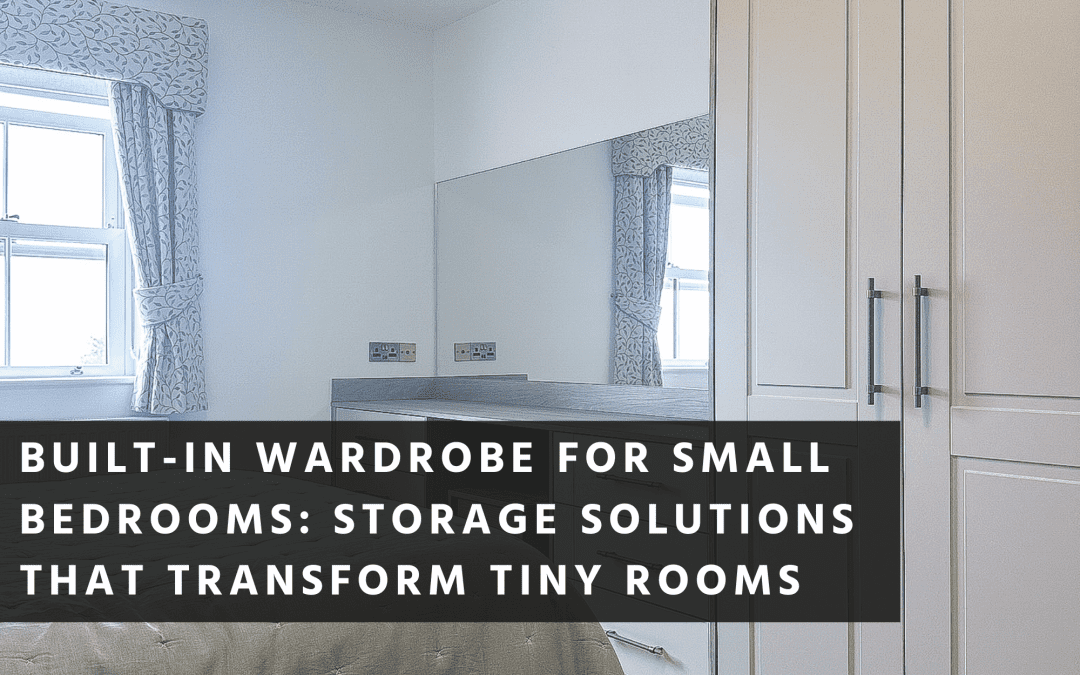
A built-in wardrobe for small bedrooms can completely transform how a tiny room feels and functions. Across Newcastle, Northumberland, and Tyne and Wear, homeowners are discovering that bespoke fitted wardrobes, designed specifically for awkward chimney breasts, sloped ceilings, and narrow box rooms, create far more storage than freestanding furniture whilst actually making small bedrooms feel larger and calmer.
This guide walks you through layout options, internal storage choices, visual tricks to avoid the ‘cupboard’ feeling, and realistic investment considerations, so you can see exactly what’s possible in your small bedroom, whether it’s a 9ft x 10ft box room or a narrow second bedroom with an awkward alcove.
Why Built-In Wardrobes Work Better in Small Bedrooms
If your bedroom is small, say, 9ft x 10ft or a narrow box room, you might worry that a built-in wardrobe will make it feel even more cramped. The opposite is usually true.
Freestanding wardrobes waste space in small rooms
A typical IKEA PAX or high street wardrobe typically sits 10–15cm away from the wall (skirting boards, uneven walls), leaves gaps at the sides (rarely fits wall-to-wall), stops below the ceiling (wasted vertical storage), and creates visual clutter with visible legs, backs, and awkward corners.
Built-in wardrobes use every centimetre
For example, they run floor-to-ceiling to maximise storage height. Because they fit wall-to-wall, there are no gaps and the finish looks clean and intentional. Inaddition, bespoke designs can build around chimney breasts and alcoves, turning problems into features. As a result, messy internals stay hidden behind unified doors and the room feels calmer. Finally, they can be wall-hung or fitted flush to the skirting, so you free up floor space with no furniture “legs” eating into the room.
The result? More actual storage capacity, a visually calmer room, and often a surprising feeling of more space, because everything is contained, organised, and intentional rather than scattered across multiple pieces of furniture.
At Kevin Richardson Bespoke, we design and install fitted bedrooms across Newcastle, Northumberland, and Tyne and Wear, specialising in small, awkward rooms where off-the-shelf furniture simply doesn’t work.
Layout Ideas for Small Bedrooms: Box Rooms, Narrow Rooms & Awkward Spaces
The best wardrobe layout depends on your room shape, bed size, and how much hanging versus drawer storage you need. Here are the layouts that work best for different North East property types.
Box Rooms (Roughly Square, 8ft x 9ft to 9ft x 10ft)
Option 1: Single Wall Run
Wardrobe along one full wall, floor-to-ceiling, with sliding or hinged doors. Bed opposite or perpendicular. This works well if you need maximum hanging space and the room is used purely for sleeping.
Option 2: L-Shaped Layout
Wardrobes along two adjacent walls, creating a corner unit. The bed fits into the remaining space. This is great for rooms with a window on one wall, you maximise storage whilst keeping natural light flowing through the room.
Option 3: Dressing Room Conversion
Remove the bed entirely and use the box room as a walk-in dressing area with open shelving, hanging rails, shoe storage, and a mirror. This is perfect if you have another bedroom for sleeping and need organised wardrobe space more than you need a spare bed.
Narrow Bedrooms (Long, Thin Rooms: 7ft Wide x 12ft+ Long)
Best approach: A single wardrobe run along the short wall, floor-to-ceiling and full width. This avoids making the room feel like a corridor. Use sliding doors to save floor space, and place the bed lengthways down the room.
Avoid: Wardrobes down the long wall. This makes narrow rooms feel even narrower and creates awkward bed placement with no space to walk around.
Small Double Bedrooms (9ft x 11ft to 10ft x 12ft)
Typical layout: Wardrobe along one wall, double bed opposite or on an adjacent wall. You need a minimum clearance of 60–70cm between the bed and wardrobe doors for comfortable movement, enough space to get dressed without feeling squeezed.
Sliding vs hinged doors: Sliding doors save approximately 50–60cm of swing space, which can be the difference between fitting a double bed or only a small double. Hinged doors need clearance but feel more accessible when you’re getting dressed in a hurry.
Can You Fit a Wardrobe and a King-Size Bed in a Small Room?
It’s tight, but possible in rooms 10ft x 11ft or larger. You’ll need sliding wardrobe doors to save swing space, and you’ll have to sacrifice bedside tables or keep them very minimal. Honestly, most small bedrooms work better with a double or small double bed if you want substantial wardrobe storage. It’s about prioritising what matters most, sleeping space or storage space.
Designing Built-In Wardrobes Around Chimney Breasts, Eaves & Alcoves
North East properties, especially Victorian terraces and 1930s semis, come with architectural features that make freestanding wardrobes impossible. Built-in solutions turn these ‘problems’ into design features.
Chimney Breasts
Victorian and Edwardian terraces often have chimney breasts in bedrooms, typically a projection of 20–30cm into the room, right where you’d ideally want to put a wardrobe.
Solution: Build alcove wardrobes on either side of the chimney breast. Use the breast itself for shelving, a dressing table area, or leave it as a feature with artwork or a mirror. Bridging units across the top create continuous storage without losing the character of the room. You end up with more storage than a single straight wardrobe would give you, and the room keeps its period charm.
Sloped Ceilings & Under-Eaves (Dormer Bedrooms, Loft Conversions)
Freestanding wardrobes can’t follow sloped ceilings, you lose all the under-eaves space, which in a small room is wasteful.
Solution: Stepped or angled built-in wardrobes that follow the ceiling line exactly. Use the tallest section for full-height hanging (dresses, coats), mid-height sections for drawers or shelving, and low sections for shoe storage or folded items. Every single centimetre becomes usable. We’ve turned awkward loft bedrooms into surprisingly spacious storage solutions using this approach.
Alcoves (Either Side of a Window or Door)
Alcoves are often too narrow or shallow for standard freestanding wardrobes. As a result, they end up as wasted space with a chair or laundry basket dumped in the corner.
Solution: Custom-width wardrobes fitted exactly into alcoves. These can be shallow, 30–40cm deep, perfect for shoe storage, folded clothes, or shelving. Still far more useful than leaving the space empty or trying to squeeze in an ill-fitting unit that looks bodged.
Radiators
Radiators often sit exactly where you’d ideally place a wardrobe, and moving them feels like a big job.
Solution: Build the wardrobe around the radiator with a ventilated panel or grille at the base, allowing heat to circulate properly. Alternatively, move the radiator to an adjacent wall, it requires a plumber, but it’s often worth it for layout flexibility.
See our fitted bedrooms for examples of how we’ve solved awkward spaces across the North East, chimney breasts, eaves, alcoves, the lot.
Understanding Built-In Wardrobe Investment
Built-in wardrobes represent a significant investment in your home, reflecting the bespoke nature of the work, quality of materials, and complexity of your specific room. Every wardrobe we design is tailored to your space, so costs vary considerably based on your requirements.
What Influences Your Investment
Room complexity
Straight walls are more straightforward to fit. However, chimney breasts, alcoves, and sloped ceilings need extra design time and skilled fitting to turn architectural challenges into storage opportunities.
Internal configuration
Basic hanging rails and shelves form the foundation. Fromthere, soft-close drawers, pull-out shoe racks, adjustable shelving, and sensor-activated LED lighting add function and convenience in day-to-day use.
Door style and finish
Hinged doors are simpler than sliding mechanisms. Meanwhile, mirrored doors can add visual space. Premium finishes like painted or wood veneer offer more character than standard melamine or laminate.
The IKEA PAX Comparison
An IKEA PAX wardrobe, 2.4m wide with standard internals, costs approximately £600–£1,000 supply-only. Add £200–£400 if you hire someone to assemble it (which many people do, because it’s fiddly and time-consuming). It’ll typically last 5–10 years, won’t fit your room perfectly, and has limited resale value. When you move, it either stays behind or gets dismantled. Reassembling flat-pack furniture that’s already been built once is a nightmare.
A bespoke built-in wardrobe is a larger upfront investment, but consider what you’re getting: furniture that lasts 20+ years with quality materials, fits your exact room including all the awkward features, maximises storage capacity by using every centimetre, and genuinely appeals to buyers. Fitted storage is one of the first things buyers notice in small bedrooms. Over its lifetime, the cost-per-year is often lower than replacing flat-pack furniture every decade, and the daily experience is incomparably better.
If you’re staying in your home for the foreseeable future and have a small bedroom that needs proper storage, a built-in wardrobe is typically one of the best investments you can make. It improves your daily life every single morning when you get dressed, and it makes the room feel calmer and more intentional the moment you walk in.
For an accurate quote tailored to your specific room and requirements, contact us for a consultation. We’ll measure your space, discuss layout options, and provide a transparent quotation with no pressure and no hidden costs.
Frequently Asked Questions
Are built-in wardrobes worth it in a small bedroom?
Yes, if you’re staying in your home for 3–5+ years. They maximise storage by using floor-to-ceiling space, fit awkward features like chimney breasts and alcoves perfectly, and make small rooms feel larger through streamlined, clutter-free design. They also appeal to buyers, which freestanding furniture doesn’t.
Will a built-in wardrobe make my tiny bedroom feel smaller?
Not if it’s designed well. Floor-to-ceiling wardrobes in light colours with mirrored doors and good lighting actually make small bedrooms feel larger by reducing visual clutter and reflecting light around the room. The key is avoiding dark, heavy finishes and making sure the wardrobe feels intentional, not like an afterthought.
Can you fit a built-in wardrobe and a double bed in a 9ft x 10ft room?
Yes, but it’s tight. You’ll need sliding wardrobe doors to save swing space, and you’ll have minimal room for bedside furniture. A small double bed (4ft wide) works better than a standard double (4ft 6in) in very small rooms. It’s about prioritising, do you need sleeping space or storage space more?
How much storage can you fit in a small built-in wardrobe?
A 2.4m-wide, floor-to-ceiling wardrobe typically holds 1.2m of full-height hanging, 1.2m of double-height hanging, 4–6 internal drawers, adjustable shelving, and shoe storage for 12–20 pairs. That’s typically 50–100% more capacity than freestanding furniture occupying the same floor space, because you’re using the full height of the room and eliminating gaps.
Transform Your Bedroom with Built-In Storage
If you’re struggling with a tiny bedroom, box room, or awkward space in Newcastle, Northumberland, or Tyne and Wear, a bespoke built-in wardrobe could be the solution you need. Kevin Richardson Bespoke specialises in small-room storage, designing fitted wardrobes around chimney breasts, eaves, and alcoves that turn wasted space into organised, functional storage.