
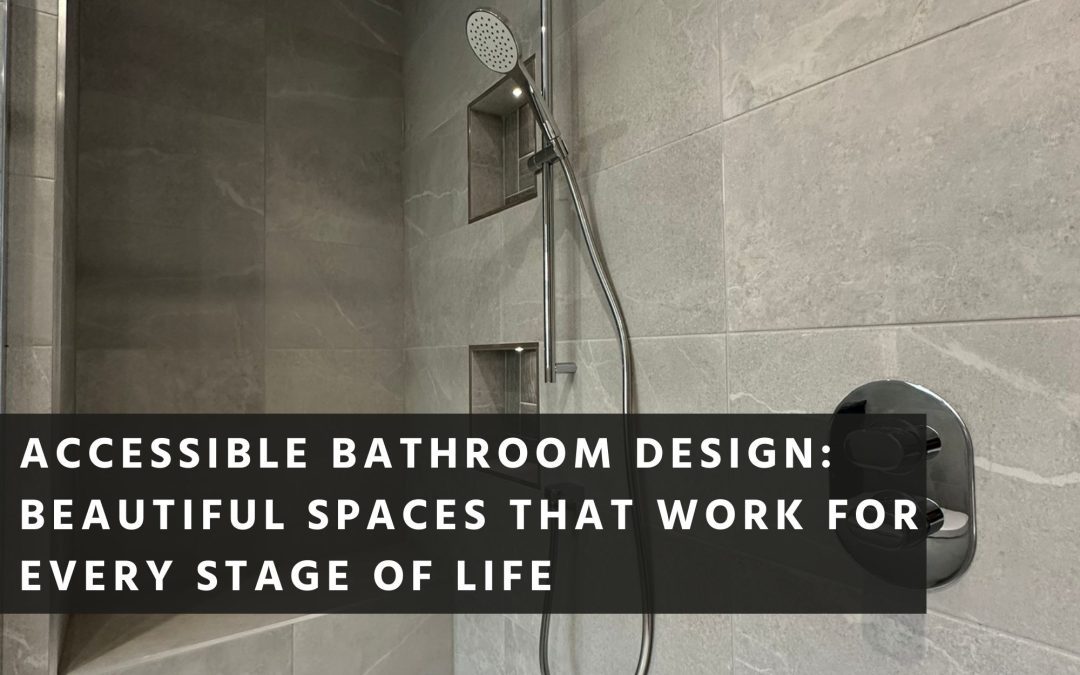
Accessible bathroom design should feel considered and properly built. Many bathrooms become ‘accessible’ over time. A grab rail is added, a plastic seat appears or a non-slip mat goes down. The room works, but it rarely feels designed that way from the beginning.
When we design an accessible bathroom from scratch, accessibility is built into the layout, drainage and lighting from day one. The result is a space that feels calm and premium, while still supporting how someone moves and lives. If you’re planning a renovation, our bespoke bathroom design service covers everything from layout and specification through to installation.
Accessible Bathroom Design Without the Clinical Feel
An accessible bathroom does not need to look medical.
Before specifying grab rails, we look at layout. The position of the toilet, basin and even the radiator often reduces the need for visible support rails altogether.
When fixtures are placed intelligently, movement becomes easier without adding hospital-looking fittings. If rails are required, they are selected in the same finish as taps and towel rails. Brushed brass, matt black and brushed nickel options allow them to blend into the design rather than stand out.
A comfort-height toilet is specified from the outset. It looks no different from a standard WC, but the additional height makes everyday use more comfortable for anyone with hip or knee discomfort.
Why We Focus on Walk-In Showers Rather Than Wet Rooms
Wet rooms rely on perfect tanking and precise drainage falls across the entire floor. In older North East homes especially, joist depth, floor construction and existing pipework often make that level of accuracy difficult without major structural alteration.
When a wet room fails, the consequences are significant. Water doesn’t stay where it should. Repairs are disruptive and expensive.
For that reason, we focus on designing level-access walk-in showers that achieve the same accessibility benefits without introducing unnecessary risk.
Our Approach: Level-Access Walk-In Showers
In most properties, a level-access walk-in shower is the safer long-term solution.
We aim for:
- Low-profile or flush shower trays where drainage allows
- Non-slip tray surfaces
- Textured, slip-resistant porcelain tiles
- A fixed screen with a flipper panel
- No raised lip to step over
- No long drainage channels that collect debris
Drainage depth determines how flush the tray can be. We explain this at the first appointment so expectations are clear from the beginning.
A well-designed walk-in shower feels seamless and premium, without the maintenance issues commonly associated with wet rooms.
Rethinking the Bath
If stepping into a shower tray is difficult, stepping over a bath edge is rarely safe.
Removing the bath often transforms how the room functions. The additional space allows for:
- A properly sized walk-in shower
- A built-in tiled seat
- Space for assistance if required
- Clear circulation
It can feel like a big decision. Most families are relieved once they see how much more practical the room becomes.
Designing Around Challenging Spaces
Across Newcastle and Northumberland, many bathrooms sit within compact terraces or older semis with chimney breasts and inward-opening doors.
The limitation is usually the layout rather than the footprint.
We regularly improve usability by rehanging doors, repositioning plumbing and using chimney recesses effectively. When accessibility is considered from the beginning, even smaller bathrooms can function comfortably.
Subtle Safety Features That Feel Premium
Safety features can be integrated quietly.
Tiled-in seats feel architectural rather than temporary. Non-slip porcelain tiles now come in finishes that feel refined rather than industrial. Luxury vinyl flooring offers warmth underfoot and added slip resistance.
We also install PIR ceiling sensors where appropriate. Feature lighting activates automatically at night, so no one walks into a dark room or fumbles for a switch.
These details make daily use easier without changing the character of the room.
Building Regulations and Structural Reality
Structural alterations and major drainage changes may require building control approval. Replacing a bath with a walk-in tray in the same location often does not.
Each property is different. In older homes especially, lifting floors can reveal joists that need strengthening or pipework that requires rerouting.
We assess these factors before finalising the design, rather than discovering them mid-installation.
Planning Ahead
Accessible bathrooms work best when they are planned before they are urgently needed.
We discuss how the room is used today and how it might need to function in five or ten years. That conversation shapes the layout from the beginning.
If you’re planning an accessible bathroom renovation in Newcastle or the wider North East, get in touch and we’ll arrange a visit to assess the space properly and design a bathroom around how you actually live.